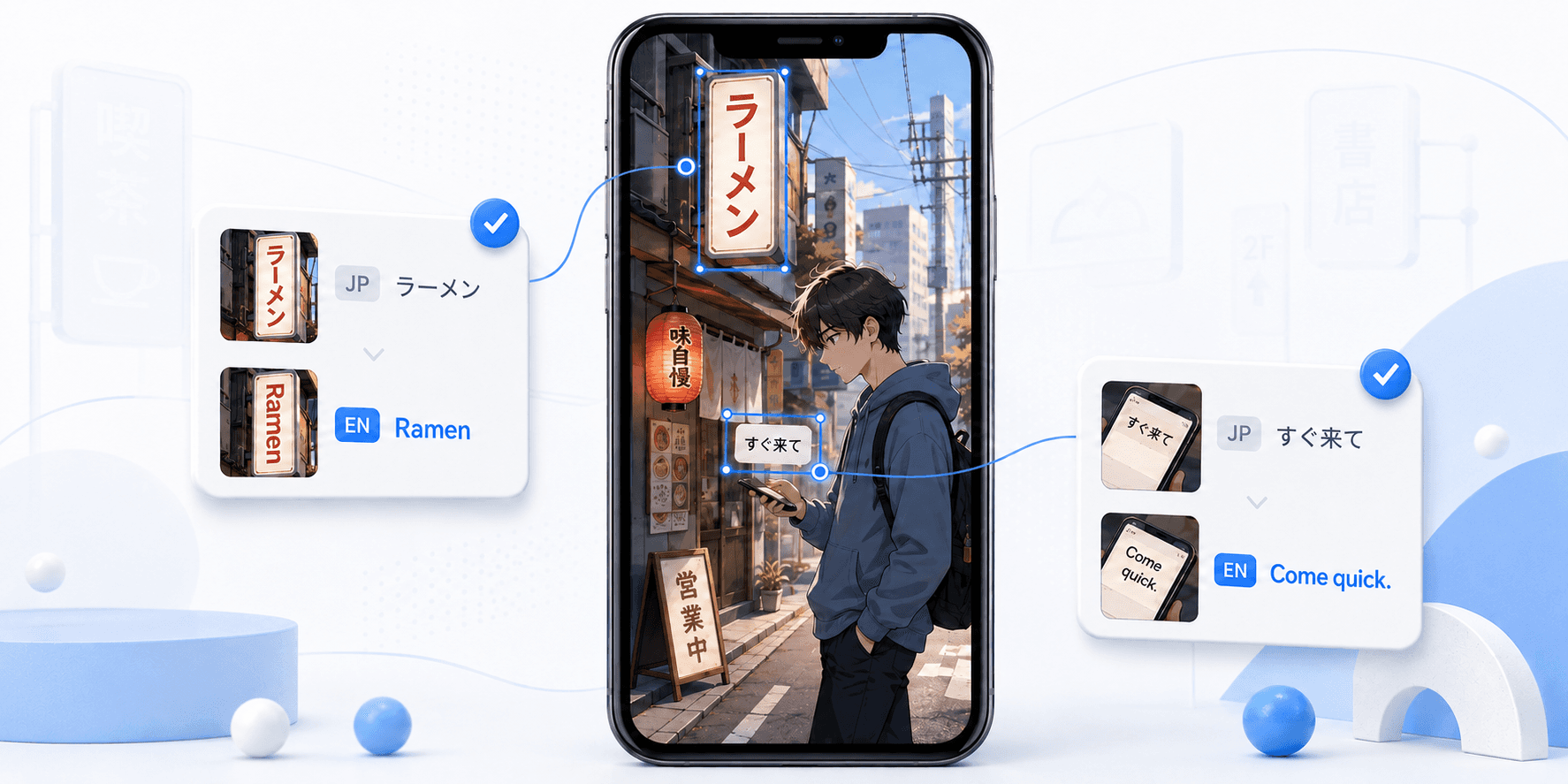
Localization is often thought of as the translation of spoken dialogue, but in the visually rich world of webtoons and comics, the story is also told through the environment. A character walks past a neon sign for a ramen shop, reads a crucial text message on their phone, or stares at a handwritten note. These background text elements are not just decoration; they build the world, provide context, and sometimes deliver essential plot points. The challenge for localization teams is deciding how to handle this "embedded" text. Do you meticulously redraw every single sign into English, potentially altering the original art and inflating production costs? Or do you leave it all in the source language, risking confusion and breaking the reader's immersion? The answer lies in a delicate balance, avoiding the twin pitfalls of under-localizing and over-editing.
Quick Answer
The golden rule for localizing background text is: translate only what is necessary for the story, and leave the rest. Over-editing occurs when teams redraw every insignificant background element, which is time-consuming, expensive, and often results in artwork that feels flat or inauthentic. A strategic approach involves a triage system: Crucial Plot Text (phone screens, letters, key clues) must be fully translated and integrated. World-Building Text (shop signs, posters) should be translated if they establish a mood or location, but can often be handled with a simple overlay or a small side-note rather than a full redraw. Insignificant Background Noise (blurry crowd signs, distant graffiti) can usually be left untranslated to maintain the original atmosphere without distracting the reader.
The Over-Editing Trap: When "Perfect" is the Enemy of "Good"
In the pursuit of a "perfect" localization, it's easy to fall into the trap of over-editing. This happens when a team decides that every single piece of text in the entire comic must be translated and redrawn into English. While the intention is noble—total immersion—the result is often the opposite.
First, redrawing complex background art to replace text is incredibly time-intensive and requires high-level artistic skill. If not done perfectly, the new English text can look like a cheap sticker slapped onto the panel, clashing with the original art style, lighting, and texture. This breaks immersion faster than leaving the original text would have. Second, it bloats production schedules and budgets, often diverting resources from more critical tasks like ensuring dialogue flows naturally—a core challenge detailed in Webtoon Localization: Translate Comics Without Breaking the Art.
Crucially, over-editing can also strip away the cultural flavor of the work. A bustling street scene in Tokyo should have Japanese signs. Replacing them all with generic English signs can make the setting feel bland and placeless. The goal of professional localization is to make the reading experience seamless, not to erase the story's origin.
Strategy 1: The "Crucial Plot Text" Mandate
There is one category of background text where compromise is not an option: text that the characters themselves are reading or interacting with, and which contains information vital to the plot.
Imagine a detective character finds a crumpled note with a villain's address. If that note is left in the original Korean, the English reader is completely locked out of the mystery. They see the character react to information they cannot access. This is a narrative failure.
For these elements—phone screens showing text messages, handwritten letters, computer screens with data, newspaper headlines revealing a plot point—full translation and integration are mandatory. The translated text must be typeset to match the original media. A handwritten note should use a localized handwritten font; a phone screen should look like a digital interface. This requires careful coordination between translators and typesetters, a process outlined in our Web Comic Localization & Typesetting: A Practical Production Guide.
Strategy 2: The "World-Building" Compromise
The next tier of text includes elements that establish the setting or mood but aren't strictly necessary to understand the immediate plot. Think of a large neon sign for a "BAR" in a gritty noir scene, or a banner for a "School Festival" in a slice-of-life comic.
These elements should generally be localized because they help the reader understand where they are and what is happening. However, a full redraw is often overkill. A common and effective compromise is the "overlay" method. The original text is left in the art, and a stylized English translation is placed directly over it or immediately next to it, using a complementary font and color.
For example, a Japanese sign for "ラーメン" (Ramen) above a shop could have a stylized English "RAMEN" placed over it, perhaps with a slight glow effect to match the neon. This preserves the original artwork while making the location clear to the English reader. It’s a balanced approach that respects both the art and the audience.
Strategy 3: The "Background Noise" Ignition
Finally, there is the vast majority of background text: the blurry signs on distant buildings, the graffiti on a passing train, the scribbles on a background character's shirt.
These elements are "visual noise." Their function is to make the scene feel busy and lived-in, not to convey specific information. Translating and redrawing them is almost always a waste of resources and can lead to a cluttered, unnatural-looking panel.
The best approach here is to simply ignore them. Leave the original text as it is. The reader's eye is meant to glide over them, registering them as texture, not content. Trying to localize this "noise" is a prime example of over-editing. It draws attention to unimportant details and can distract from the main action and dialogue—which, as we discuss in How to Fit Translations Into Speech Bubbles, is already fighting for the reader's attention.
Examples: Seeing the Strategy in Action
Let’s look at a single comic panel and apply this triage system.
Scene: A character is standing on a busy street, looking at their phone.
Element A (Phone Screen): Shows a text message: "Meet me at the warehouse in 10 mins." (Source: Japanese)
Element B (Large Shop Sign above them): Reads "COFFEE & BOOKS." (Source: Japanese)
Element C (Distant blurry signs down the street): Various indecipherable text. (Source: Japanese)
Localization Strategy:
Phone Screen (Crucial Plot Text): Must be fully translated and typeset to look like a realistic phone message in English. The original Japanese text is completely replaced.
Shop Sign (World-Building): Should be localized to establish the setting. An English overlay of "COFFEE & BOOKS" is placed over the original Japanese sign, using a similar font style. The original art underneath is not redrawn.
Distant Signs (Background Noise): Left completely untouched. They remain as blurry Japanese text, adding texture to the background without distracting the reader.
The Background Text Triage Checklist
When deciding how to handle a piece of background text, run it through this quick decision tree:
Does a character interact with or react to this text?
Yes: -> Crucial Plot Text. Must be fully translated and integrated.
No: -> Go to next question.
Does this text contain information essential to understanding the current plot or mystery?
Yes: -> Crucial Plot Text. Must be fully translated and integrated.
No: -> Go to next question.
Does this text help establish the location, mood, or atmosphere of the scene?
Yes: -> World-Building Text. Translate using an overlay or subtle placement.
No: -> Background Noise. Ignore it.
Conclusion
Localizing background text is a constant exercise in judgment. It requires a deep understanding of storytelling, visual composition, and resource management. By adopting a strategic triage approach, you can ensure that every piece of localized text adds value to the reader's experience without falling into the expensive and artistic trap of over-editing.
Want every panel detail to read clearly in any language? Download Feels Local and try it on your next comic episode for free. When you’re ready to polish background text, improve readability, and scale your localization workflow, subscribe to Feels Local.

