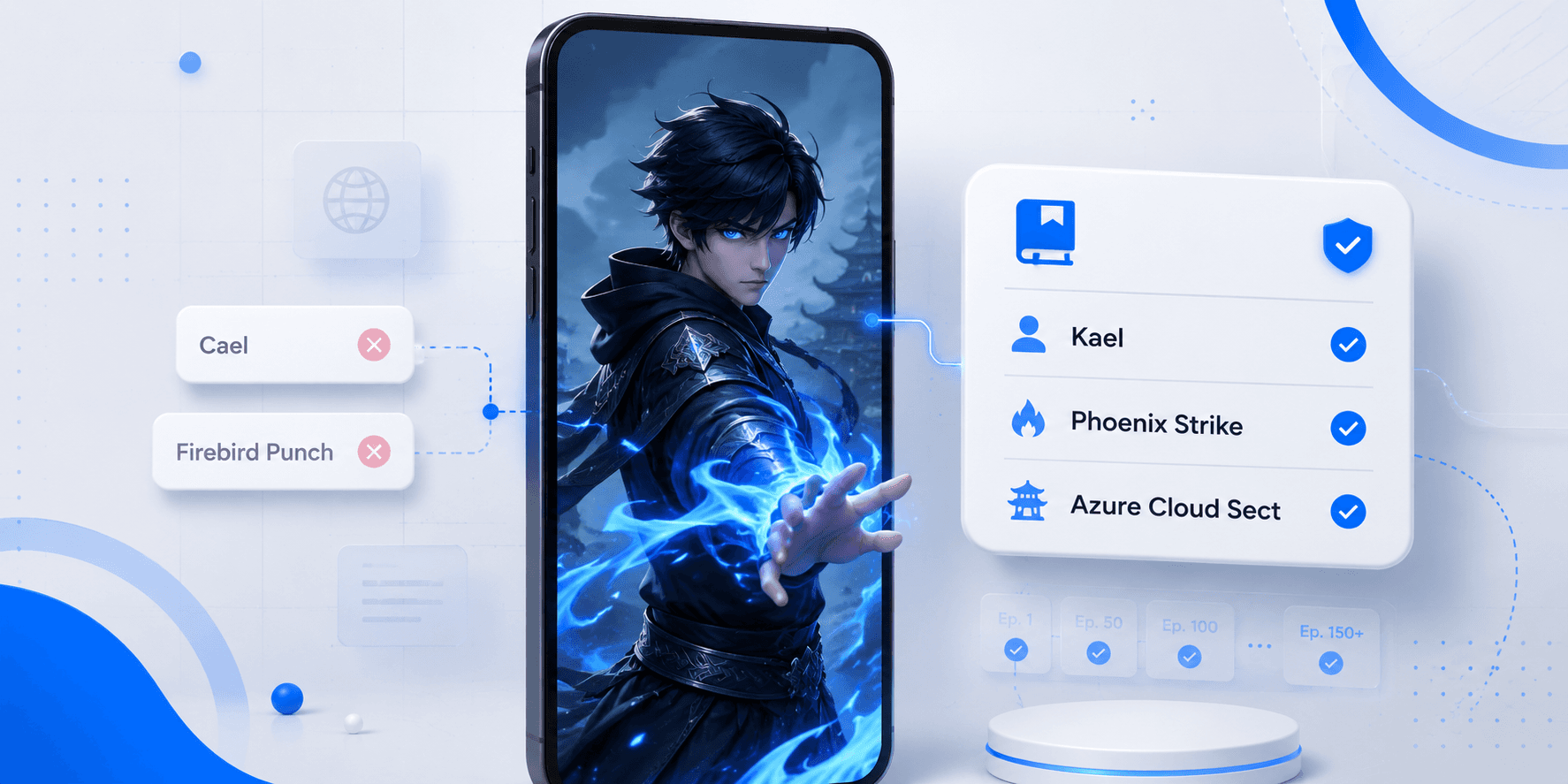
Imagine you are 300 chapters into an epic fantasy web novel. The heroes have spent the last hundred chapters searching for the legendary "Abyssal Key" to unlock the Demon Gate. It is the central McGuffin of the entire story arc. Finally, they defeat the dungeon boss and open the treasure chest. The narration reads: "Inside, faintly glowing, lay the Void Key."
You pause. Is this the same key? Is "Void" a synonym for "Abyssal," or did they find the wrong item? Did the author introduce a secondary plot device, or did the translator just get bored of typing "Abyssal"?
In that split second, immersion dies. Instead of feeling the triumph of the characters, the reader is forced to become an amateur editor, trying to parse the meta-text of the translation to understand the actual plot. When terminology is handled loosely in serialized fiction, it doesn't just create typos; it creates accidental plot holes that confuse readers and erode trust in the storytelling.
The Quick Answer: The Danger of "Narrative Dissonance"
Terminology mistakes create plot confusion when a translator treats a "fixed narrative anchor" (a specific proper noun, rank, or skill crucial to the story) as a flexible descriptive word.
In creative writing, varying your vocabulary is usually a good thing. In localization, varying established terminology is disastrous. When a specific term is established—whether it’s a character’s title, a magical law, or a unique item—it becomes part of the story's logic. Changing that term mid-stream, even to a close synonym, breaks that logic. The reader can no longer be certain if the story has changed, or just the words describing it.
Practical Rules: Identifying the plot-killers
To prevent these narrative disasters, localization teams must recognize that not all words are created equal. Some words carry the weight of the plot on their shoulders. Here are the three most common mistakes where linguistic looseness creates narrative chaos.
Mistake 1: The Synonym Trap (Drifting Proper Nouns)
The most frequent cause of plot confusion occurs when a translator, consciously or unconsciously, starts using synonyms for established proper nouns. This often happens in long-running series where multiple translators work over months or years. A "Crimson Potion" in Chapter 50 becomes a "Red Health Vial" in Chapter 150.
While they mean the same thing functionally, the reader doesn't know if the "Red Health Vial" has the same specific properties as the "Crimson Potion" introduced earlier. Does it heal the same amount? Is it brewed from the same rare ingredients crucial to the subplot in volume two?
This "terminology drift" is inevitable without rigid guardrails. As explored in our guide on How to Stop Inconsistent Names, Terms, and Tone in Localization, once a term is capitalized and defined as a unique entity in the world, it must be locked down. It is no longer just a description; it is a named actor in the story. Allowing synonyms for these terms is the fastest way to confuse your audience about what is actually happening on the page.
Mistake 2: The Rank and Title Shuffle (Breaking Social Hierarchies)
Many popular web novel genres, such as LitRPG, Xianxia (cultivation), and military sci-fi, rely heavily on rigid hierarchies. Characters are defined by their specific rank, stage, or level.
A massive common mistake is treating ranks as interchangeable descriptors rather than fixed titles. If a character is introduced as a "Silver-Rank Adventurer," referring to them later as merely a "skilled fighter" or, worse, a "Gold-Rank" due to a translation error, fundamentally breaks the reader’s understanding of the power dynamics.
If the plot hinges on the protagonist needing to be a "Vice-Captain" to access a restricted area, but the translation carelessly calls them a "Lieutenant" in that scene, the plot mechanic fails to make sense. To avoid this, your linguistic infrastructure must define the exact social scaffolding of the world. This level of detail is a core component of what we discuss in Localization Glossary & Style Guide: Build Consistency at Scale, ensuring that social hierarchies remain solid throughout the narrative.
Mistake 3: The "Generic vs. Specific" Fail (Diluting Lore)
Authors often use specific terms to hint at deeper lore that will be revealed later. A lazy translation mistake is rendering these specific, flavor-rich terms into generic English equivalents to make the text "flow" better.
For example, if the source text refers to a specific magical energy as "Vis," which has unique properties tied to the world's history, translating it simply as "mana" or "energy" deletes that lore. Later, when the unique properties of "Vis" become central to the climax, the English reader is completely lost because they’ve been reading a genericized version of the magic system.
Maintaining the specificity of the author’s world-building is vital. This requires a proactive approach to managing your linguistic assets, ensuring that unique concepts retain their uniqueness in English. For a deeper dive into managing these assets over the long haul, refer to The Ultimate Guide to Terminology Management for Serialized Content.
Examples in Action: Confusion Across Languages
Different source languages present unique opportunities for terminology mistakes to derail the plot.
Japanese (Honorifics & Relationships): Plot points in romance or political dramas often revolve around changing relationships, signaled by a shift in honorifics (e.g., moving from –san to addressing by first name only).
The Mistake: If the translator inconsistently renders these honorifics—sometimes localizing them, sometimes dropping them, sometimes using different English titles—the reader misses the pivotal moment when the relationship dynamic shifts, rendering the subsequent emotional fallout confusing.
Chinese Xianxia (Cultivation Realms): These novels feature dozens of specifically named power stages (e.g., Qi Condensation, Foundation Establishment, Core Formation).
The Mistake: Translating similar-sounding stages inconsistently. If "Golden Core" and "Aurous Core" are used interchangeably for the same stage, the reader loses track of the protagonist's actual progress relative to their enemies, killing the tension of fight scenes.
Korean LitRPG (Item Grades): Systems often use precise grading (S-Rank, A-Rank, B-Rank items).
The Mistake: A typo or inconsistent translation that downgrades a reward. If the protagonist completes an impossible quest and is supposed to receive an "SS-Rank" item, but the translation says "S-Rank," the reader feels cheated and confused about the reward's actual value.
The "Plot-Saver" Checklist for Editors
Before finalizing a chapter, editors should run a specific pass looking for these plot-threatening errors:
The Proper Noun Audit: Are all capitalized terms identical to their entry in the project glossary? (No "Void Key" vs. "Abyssal Key").
The Hierarchy Check: When a character is addressed by rank or title, is it the exact rank they currently hold?
The Unique Item Scan: Are key plot items referred to by their full, specific names, rather than generic descriptions?
The Magic System Consistency: Are the terms for energy, spells, and power levels used consistently with established lore, avoiding generic synonyms?
Conclusion
A terminology mistake in serialized fiction is rarely just a linguistic error; it is a narrative stumble. When readers have to stop and figure out if "The Shadow Guild" is the same thing as "The Organization of Shadows" mentioned ten chapters ago, they stop being immersed in your story. By recognizing that certain terms act as structural pillars for the plot and treating them with the necessary rigidity, you ensure that the reader’s experience is focused on the drama and excitement of the story, not the inconsistencies of the translation.
Worried that inconsistent proper nouns are creating accidental plot holes? Download Feels Local and try it on your next chapter for free. When you’re ready to keep names, places, and key terms consistent across your series, subscribe to Feels Local and protect your story’s integrity.

